

EXPLORING THE FRAGRANCE LAYERS IN PERFUME ESSENTIAL OILS
Perfume doesn't retain a single scent from the moment it's applied until it evaporates. Each bottle of perfume... perfume essential oils They are all built from layers of evaporating fragrance in different orders. This process is divided into a system of three distinct fragrance layers. Knowing which layers the fragrances are arranged in will make choosing a scent easier and help it last longer.
I. WHAT FRAGRANCE LAYERS CREATE A SCENT?
1. How does a fragrance tower work?
The fragrance pyramid is a model that divides the fragrance notes of a perfume according to their evaporation rate and the transformation of the fragrance molecules over time. The model is divided into three parts:
- Top notes (Fragrance notes): These molecules are lightweight and small in size. Due to weak binding forces, they evaporate most quickly upon contact with air.
- The base notes (Middle notes): Consist of molecules with medium weight. They begin to become more apparent as the top notes subside, forming the heart of the entire fragrance.
- Base notes: These consist of heavy, complex, and stable molecules. They linger on the skin the longest, creating the depth and lasting impression of the fragrance.
2. The significance of dividing fragrance layers
The division of fragrance layers offers many practical benefits in terms of experience and application:
- Accurately assessing a fragrance: The initial scent isn't the true scent. You need to wait for the middle and base notes to fully emerge before determining if the fragrance is truly suitable.
- Creating balance and depth: Perfumers use a three-tiered structure to create harmony, avoiding aromas that are too strong or overwhelming to the sense of smell.
- Controlling fragrance longevity: The blending ratio of the different layers determines whether the scent will evaporate quickly or linger on the body for a long time.
- Precise blending: Handmade perfumers rely on the fragrance pyramid to select ingredients, allocating the exact percentages for each fragrance group.
A perfume has three layers of fragrance: top notes, middle notes, and base notes.
II. WHAT ARE THE THREE LAYERS OF FRAGRANCE IN PERFUME OILS?
1. Top Notes – First Impression
Characteristics: This is the first layer of fragrance that comes into contact with the sense of smell as soon as the cap is opened or the essential oil is added. The molecules in this layer evaporate very quickly.
Common ingredients: Citrus essential oils (orange, lemon, bergamot). Mild herbs (peppermint, eucalyptus).
Role: To create a fresh and captivating initial impression from the very first moment of smelling.
2. Middle Notes – The heart of the fragrance
Characteristics: Appears when the top notes fade, and accounts for most of the perfume's lifespan on the skin.
Common ingredients: Floral essential oils (lavender, rose, jasmine). Warm spices (pink pepper, cinnamon).
Role: To define the core character of the fragrance, soften the sharpness of the top notes, and create a smooth bridge leading to the base notes.
3. Base Notes – Long-lasting fragrance
Characteristics: The scent becomes more apparent as it fades. It lingers on skin and clothing for hours thanks to its heavy molecules. It has a complex and dense structure.
Common ingredients: Woody essential oils (sandalwood, cedar), resins (amber), musk, and vanilla.
Role: Creates depth and acts as a fixative to help the scent last longer.
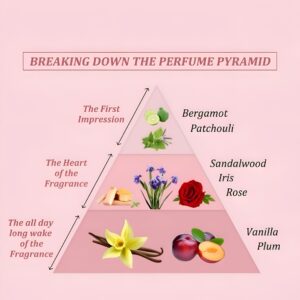
The fragrance notes in each layer of the perfume fragrance pyramid.
III. HOW LONG DO THE FRAGRANCE LAYERS IN PERFUME OILS LAST?
1. Factors affecting the scent longevity of essential oils
- Concentration: Pure essential oils are highly concentrated and retain their fragrance better than diluted solutions.
- The ingredient group includes: Citrus fruits which evaporate quickly, and resins and tree sap which have extremely long-lasting fragrance.
- Skin type: Oily skin retains fragrance longer than dry skin because the sebaceous glands trap fragrance molecules better. Body temperature and pH also determine the rate of diffusion.
- Environment: Hot weather causes essential oils to evaporate faster than cool weather.
- Storage instructions: Light, heat, and air entering the bottle will degrade the essential oils, reducing their longevity over time.
- Fragrance fixatives: Base oils and base fragrance ingredients help to prolong the scent's longevity on the body.
- Air humidity and weather: In winter or on days with high humidity, perfume molecules stay on the skin better because the air is less drying. In hot summer weather, the sweat glands are more active, which accelerates the evaporation of essential oils.
- Diet and health: A diet high in spices (onions, garlic, chili peppers) or certain medications can alter pH levels and natural body odor, changing how perfumes scent on the body.

A healthy diet and exercise keep the body healthy, which in turn affects how long perfume lasts on the skin.
2. How to make your perfume essential oil scent last all day
- Moisturize your skin: Well-hydrated skin helps fragrance molecules last longer.
- Apply to pulse points: wrists, behind the ears, elbows (areas with higher body temperature that help to disperse the scent effectively). roll-on perfume oil This alcohol-free oil-based formula adheres closely to the skin, provides long-lasting fragrance for hours, and projects a subtle scent at close range.
- Avoid rubbing: Do not rub vigorously after application as this can easily break down the molecular structure of the fragrance, causing the top notes to dissipate quickly.
- Spray it on clothes/hair: Fabric fibers and hair help retain the scent longer than skin surfaces.
IV. APPLICATIONS OF PERFUME ESSENTIAL OILS IN DAILY LIFE AND BLENDING
1. Basic methods for mixing essential oils for perfume
When blending, divide the fragrance notes in the essential oils according to the following proportions:
Preparation: Choose your favorite natural essential oils and a suitable solvent (food-grade alcohol or carrier oil).
Scale design:
- Top notes: 20-30% total essential oils
- Middle notes: 50% total essential oil
- Base notes: 20-30% total essential oils
Blending and aging: Mix the essential oil and solvent thoroughly in the appropriate ratio. Seal tightly and store in a cool, dry place for 2-4 weeks to allow the molecules to blend and stabilize before use.
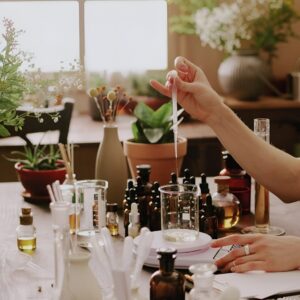
Making perfumes from essential oils and natural ingredients.
2. Tips for choosing fragrances according to purpose
Fresh, energetic scents: Prioritize top notes of citrus, mint, or lemongrass.
Luxurious, warm scent: Choose middle notes of jasmine and rose combined with base notes of sandalwood or amber.
Relaxing scent: Suitable for essential oils with notes of cedarwood, eucalyptus, or lavender.

Flowers and herbs like lavender, mint, and marigold allow you to choose the right fragrance for each purpose.
V. Frequently Asked Questions About Fragrance Layers in Perfume Essential Oils
1. Why do perfume oils smell so strong and pungent when you first smell them?
The top notes and solvent molecules evaporate rapidly within the first few minutes of contact with air. After about 5-10 minutes, the alcohol dissipates completely. The fragrance then becomes more stable, softer, and gentler.
2. Do pure essential oils have all three fragrance notes?
Some natural essential oils have a mild complexity. But to create a distinct, sharp, and deep three-tiered fragrance structure, many ingredients need to be blended together.
3. Which fragrance layer is the most important?
All three are important. Top notes create the initial impression, middle notes form the core of the fragrance's personality, and base notes determine longevity and lingering scent. When choosing a fragrance, evaluate all three layers comprehensively, especially the middle and base notes, as they determine its long-lasting quality.
4. Why does the scent of perfume on the skin differ from that on a test strip?
Fragrances react directly with each person's skin pH, natural oils, and temperature. The same bottle can produce different scents on different people.
5. Do perfume oils have an expiration date?
Yes. Typically, it lasts from 1 to 3 years, depending on the ingredients and storage. If it smells sour, changes color, or becomes unusually pale, you should stop using it to ensure skin safety.
6. Is it possible to make my own perfume oils at home for immediate use?
Do not use immediately. After mixing essential oils with a solvent (alcohol or carrier oil), the molecules need time to bind tightly together. Using them immediately will result in only smelling alcohol or the fragrance notes being disjointed and not blended together.
7. How to "save" a bottle of perfume oil that was accidentally diluted too strongly or too harshly?
This can be balanced by adding a few drops of citrus essential oil (if you want to soften the intensity) or by adding a small amount of solvent or carrier oil to dilute the overall concentration.
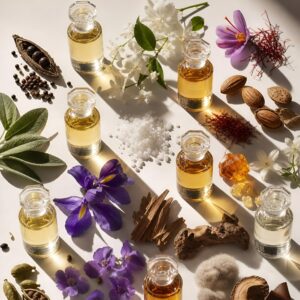
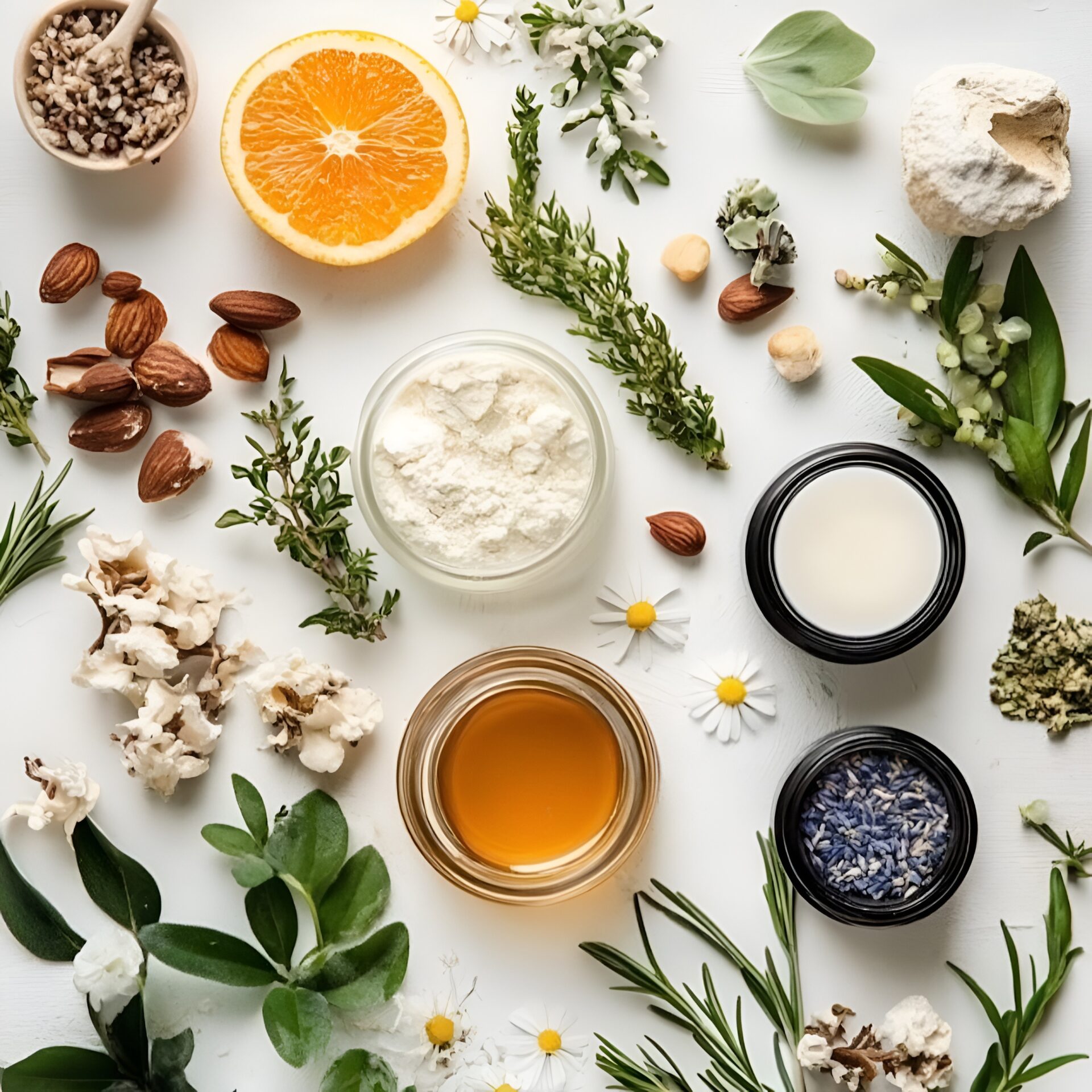
Essential oils and natural ingredients create the layers of fragrance in perfumes.
VI. CONCLUSION
Understanding the different layers of fragrance in perfume oils helps you choose the right scent. Fragrance changes over time on the skin: top notes evaporate quickly and create the initial impression, middle notes are the dominant part that expresses personality, and base notes linger the longest and determine longevity.
Whether you're looking for a fragrance that suits you, creating your own essential oils, or simply want a scent that lasts longer throughout the day, understanding the three-layer structure will help you choose the right one. When testing fragrances, wait for the top notes to settle before evaluating, as the middle and base notes are what you'll be wearing all day. If you're creating your own, remember to let the fragrance mature for 2-4 weeks to allow the layers to blend before use.
Besides the structure of the fragrance layers, essential oil concentration It also determines whether the fragrance is strong or light, and whether it lasts a long time or fades quickly.